

Three Reasons to Be a Mentor
July 26, 2026
I truly believe that the most valuable benefit we offer members is the opportunity to be part of the NASPP community. And now, I'm thrilled to announce, that we have a new way for members to support each other. Our newest program, NASPP Mentor Connect, pairs members who want to mentor with members who want to be mentored.
I recently sat down with Robyn Shutak of Infinite Equity to talk about mentorship. Infinite Equity is generously supporting the program, and mentorship is a topic that's personal for Robyn—both from her own career and from years spent mentoring others in equity compensation.
Robyn says that mentorship completely changed the trajectory of her career. Like many of us, she had no background in stock administration when her mentor hired her into her first stock admin role. More than 15 years later, Robyn is a leader in the field and the two are still friends. Robyn says:
We genuinely connected and I think she saw something in me that I hadn't fully seen in myself yet.
Experiences like Robyn’s are exactly why we built NASPP Mentor Connect and why I want to use today's post to make the case for becoming a mentor yourself. Here are three reasons (plus a bonus) that I learned from my conversation with Robyn.
1. Mentoring Benefits You as Much as Your Mentee
The most common misconception about mentorship, Robyn told me, is that it's one-directional. It isn't.
When Robyn mentored a colleague through a program at a previous company, she expected to be the one doing the giving. Instead, she found the relationship sharpened her own thinking just as much as it helped her mentee:
It doesn't feel like giving something away: it feels like gaining something.
Talking someone else through their career options, Robyn explained, forces you to articulate your own experience in a new way, and that process alone can reignite your enthusiasm for the field. As she put it, being trusted with someone's growth is "genuinely energizing," and that energy is a big part of what keeps experienced professionals coming back to mentor again and again.
2. It's a Relationship, Not a Curriculum—and That's the Point
Training teaches skills. Coaching hands you frameworks. Mentorship is something else entirely, and Robyn was clear about the distinction:
Mentorship is a relationship... a mentor has usually walked in a similar path and they're sharing real experience, not a curriculum.
That relationship element is exactly what makes mentoring worthwhile for the mentor, too. A one-hour training class rarely turns into a 15-year friendship. A good mentoring relationship might. Robyn still keeps in touch with the mentor who first hired her all those years ago—proof that the connection itself, not just the advice exchanged, is the lasting value.
As a mentor, you don't need to have every answer. Robyn's advice to anyone hesitant to volunteer as a mentor: you're there to be a sounding board, not an expert with a script:
You're not expected to have all the answers as the mentor. You're just supposed to help people think creatively about how to solve the challenges they're facing.
3. You'll Build (and Strengthen) Your Own Network
Mentoring relationships don't stay confined to a single conversation or a single year. They tend to widen into a broader web of connections—for the mentee and the mentor alike.
Robyn credits much of her own career, including opportunities she couldn't have found on her own, to relationships built through moments like these. She's candid that a large part of what has sustained her in equity compensation isn't just technical knowledge, but the community around it: people who "share knowledge, answer questions, open doors, and just help people navigate their careers."
Cross-pollination matters here too. Robyn pointed out that mentorship doesn't have to run "older, more senior person" to "younger, junior person." Peers can mentor each other just as effectively, each bringing knowledge the other doesn't have. Every mentoring relationship you enter, in either direction, adds another thread to your professional network.
Bonus: Mentoring Pays It Forward
I asked Robyn what she hopes for the next generation of equity compensation professionals. She sees mentorship as a way for us to “pay it forward”:
Every leader I admire has had someone in their corner at some point... mentorship is how we pass it on—the gift that keeps on giving.
Becoming a mentor is a direct way to give someone else the kind of moment that changed your own career—the moment when someone else believed in you first.
Ready to Become a Mentor?
Mentor Connect is open to all NASPP members, whether you're ready to mentor someone else or looking for a mentor of your own. Robyn's advice for anyone on the fence: Just say yes!
Check out our full interview and learn more about NASPP Mentor Connect.
Frequently Asked Questions About Mentorship
Why should I become a mentor? Mentoring benefits both people in the relationship. Mentors gain fresh perspective, sharpen their own thinking, and often reignite their passion for their field—while helping a mentee build confidence and skills.
How is mentorship different from training or coaching? Training and coaching deliver knowledge, tools, and frameworks. Mentorship is a relationship built on trust and real experience, and it tends to evolve and deepen over time in a way a class or coaching engagement typically doesn't.
Do I need to be senior or highly experienced to be a mentor? No. Mentors don't need to have all the answers. The role is largely about listening, asking good questions, and offering a sounding board. Peer-to-peer mentoring, where colleagues at similar levels mentor each other, can be just as valuable as traditional senior-to-junior mentoring.
How long does a mentoring relationship typically last? NASPP Mentor Connect is structured around an initial one-year commitment, after which both people can decide whether to continue. Many mentoring relationships last well beyond that, sometimes turning into long-term professional friendships.
How do I get started as a mentor or mentee? NASPP Mentor Connect is open to all members and allows mentors and mentees to match based on shared interests. Start by completing your mentor or mentee profile.
More questions? Read our NASPP Mentor Connect FAQ.
Special thanks to Robyn Shutak of Infinite Equity, NASPP's Mentor Connect program partner, for sharing her perspective on mentorship.
-
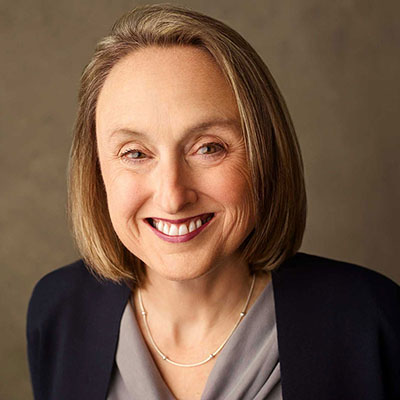
By Barbara BaksaExecutive Director
NASPP